Check-Mig by Air, Land and Sea
Check-Mig by land, air, or sea is the same Migración Colombia form, but it adapts to how you enter or leave the country. Many travelers assume it only applies to flights. In reality, it's just as mandatory when you cross a border by road, river, or boat.
In 30 seconds: Check-Mig works the same by air, land, and sea, but the transport details change. By plane you enter the flight number; by land, the border crossing; and by sea, the vessel or cruise name. The duty to register is identical across all three modes.

Check-Mig Is Not Tied to Flights
There's a widespread myth that Check-Mig is an "airport thing." It isn't. The form is an immigration pre-registration that applies to anyone crossing a Colombian border, no matter how they travel.
Colombia shares land borders with Ecuador, Venezuela, Peru, Brazil, and Panama, plus coastlines on the Caribbean and the Pacific and a vast river network in the Amazon and Orinoco basins. Every one of these routes counts as an immigration control point.
That's why it helps to know what changes in each case. The logic of the form is identical; what varies are the transport-mode fields and a few logistical details about the crossing point.
Quick summary: Check-Mig applies by air, land, sea, and river. It's not an airport-only procedure: any border crossing requires it.
Transport-Mode Differences at a Glance
Before the detail, this table sums up what data changes when you travel by air, land, or sea. The structure of the form stays the same; only the transport section adjusts.
| Transport mode | Main data that changes | Practical notes |
|---|---|---|
| Air | Flight number and airline | Most common case; the airline often checks it |
| Land | Border crossing (bridge/post) | You enter the control point, not a flight |
| Sea (cruise) | Vessel name and port | Cruise lines often coordinate the process |
| Sea (small boat) | Boat name and dock | Confirm the port's immigration post |
| River | Vessel and river point | Common in the Amazon and Orinoco |
As you can see, Check-Mig by land replaces the flight number with the name of the border crossing. By sea, you enter the vessel. Everything else —passport, dates, purpose of travel— stays identical across every mode.
Quick summary: Only the transport section changes. Flight by air, border crossing by land, and vessel by sea or river.
Check-Mig by Air: The Most Common Case
The air mode is the best known, since most travelers reach Colombia by plane, landing at airports like El Dorado (Bogotá), José María Córdova (Medellín), or Rafael Núñez (Cartagena).
Here, the form asks for the flight number, airline, and date of departure or arrival. This is the detail most airlines verify at the counter or gate before letting you board.
If it's your first time, follow our step-by-step guide to filling out Check-Mig field by field before your flight.
Key fact: For air travel, the flight number appears on your boarding pass or airline email. Copy it exactly to avoid rejections.
Quick summary: By air you enter the flight, airline, and date. It's the field airlines usually check before boarding.
Check-Mig by Land: Borders With Neighboring Countries
Here's the big difference. Thousands of people enter Colombia by road every day, especially from Ecuador and Venezuela. At these crossings, you also need to complete Check-Mig before reaching the immigration post.
Instead of a flight number, the form asks you to identify the border crossing you use. These are the main land corridors:
- Ecuador: the Rumichaca International Bridge (Ipiales–Tulcán), the busiest land crossing in the south.
- Venezuela: the Cúcuta bridges (Simón Bolívar and Francisco de Paula Santander), the key northeastern crossings.
- Peru: the Leticia–Santa Rosa area, mostly river-based and mixed in the Amazon tri-border zone.
- Brazil: the Leticia–Tabatinga corridor, also in the Amazon.
- Panama: the Darién region, with no formal vehicle crossing and specific controls.
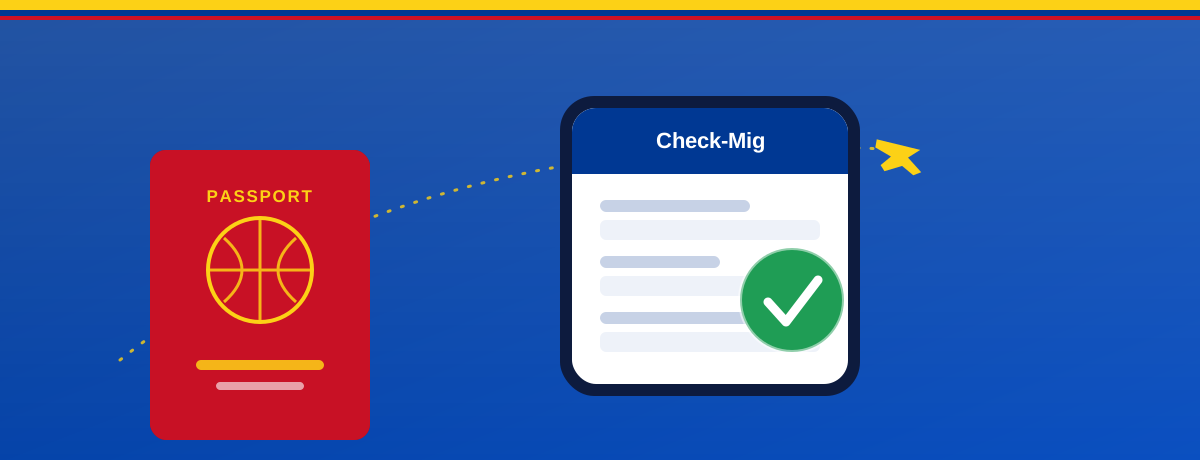
When traveling by land, keep your ground-transport details (bus company or vehicle) and the name of the control post handy. See the full list in our Check-Mig requirements and documents guide.
Quick summary: By land you enter the border crossing (Rumichaca, Cúcuta, Leticia, or Darién) instead of a flight. The rest of the form is unchanged.
Check-Mig by Sea and River: Cruises and Boats
The sea mode matters most at destinations like Cartagena, Santa Marta, and San Andrés, popular stops for international cruises. When you arrive by ship, every passenger must be registered in Check-Mig.
Here, the form asks for the vessel or cruise name and the port of entry or exit. On many cruises, the line coordinates part of the process, but the responsibility to complete your own details still rests with you.
There's also a river mode, common in the Amazon and Orinoco. Many of those routes combine river and land, so it's worth confirming which immigration control point matches your itinerary.
Quick summary: By sea you enter the vessel and port; by river, the boat and crossing point. The cruise line may help, but the registration is your responsibility.
What Data Changes and What Stays the Same
It helps to separate what varies from what stays constant, regardless of the route. That way you know exactly what to prepare before you start.
Data that changes by transport mode:
- The flight number (air), the border crossing (land), or the vessel (sea/river).
- The entry or exit point: airport, bridge, port, or dock.
- The carrier: airline, bus company, or cruise line.
Data that stays the same in every case:
- Your valid passport or travel document.
- Your personal details (name, nationality, date of birth).
- The purpose of travel and your accommodation address in Colombia.
- A valid email address to receive the confirmation.
As with every mode, it's one form per person, children included. Check the specifics in Check-Mig for citizens and foreign visitors.
Quick summary: The transport and crossing point change; passport, personal details, purpose, and accommodation stay the same. Always one form per person.
Timing and Confirmation: Identical Across All Three Routes
The 72-hour rule applies equally to air, land, and sea. You must complete Check-Mig within the three days before travel and, as the recommended cut-off, up to 1 hour before the crossing.
This matters most at land borders, where there's no "boarding gate" to remind you. No one will stop you before you reach the post, so it pays to register in advance.
Expert tip: At land and river crossings, complete Check-Mig the night before. Many border areas have limited internet coverage, and you don't want to depend on the signal at the last moment.
You can review the timing with examples by time slot in when to complete Check-Mig (72-hour rule).
Quick summary: The 72 hours apply to all three routes. By land and river, do it the night before because of limited internet coverage.
Common Mistakes by Transport Mode
Each mode has its frequent slip-ups. Knowing them saves you delays:
- Air: confusing the flight number with the booking or locator code.
- Land: choosing the wrong border crossing or leaving it blank.
- Sea: misspelling the cruise name or the port of call.
- River: not confirming which control point matches a mixed route.
- All modes: filling it out outside the 72-hour window or not saving the confirmation.
These errors can force you to redo the form right at the border. Avoid them with our common Check-Mig mistakes guide.
Quick summary: Each route has its typical error. Double-check the transport detail (flight, crossing, or vessel) and always save the confirmation.
Does It Cost the Same by Any Route?
Yes. Check-Mig has no cost on the official Migración Colombia site, whether you travel by air, land, or sea. There's no "land surcharge" and no separate cruise fee.
What can vary is convenience. Travelers crossing at borders with weak signal or arriving by cruise sometimes prefer an optional assistance service that reviews the transport details and prevents last-minute rejections.
That service is optional and paid for convenience and support, not for the form itself. Compare both options in how much Check-Mig costs and the official form.
Quick summary: The form has no cost by any route. Assistance is an optional extra, useful mainly at borders with poor connectivity.
What Happens If You Skip It by Land or Sea
Skipping Check-Mig has consequences in any mode, not just at the airport:
- Delays at the immigration post while you fill it out on the spot.
- Longer queues at high-traffic border crossings.
- Setbacks if the internet signal fails right at the border.
By land and sea there's rarely an airline to remind you, so forgetting is more common. Getting ahead of it is the best strategy. Learn more in what happens if you skip Check-Mig.
Quick summary: Without Check-Mig you risk delays and queues at any border. By land and sea no one will remind you: do it before departure.
Key Takeaways
- Check-Mig applies by air, land, sea, and river, not just flights.
- Only the transport section changes: flight, border crossing, or vessel.
- Colombia shares land borders with Ecuador, Venezuela, Peru, Brazil, and Panama.
- The 72-hour timing and confirmation are identical across all routes.
- It's no-cost by any mode; assistance is optional.
- At borders with poor coverage, complete it the night before.
Frequently Asked Questions About Check-Mig by Air, Land, and Sea
Is Check-Mig by land mandatory?
Yes. If you cross a Colombian land border —from Ecuador, Venezuela, Peru, Brazil, or Panama— you must complete Check-Mig before reaching the immigration post, just as you would for an air trip.
What data changes if I travel by land instead of by plane?
Instead of the flight number, you enter the border crossing you use (for example, Rumichaca with Ecuador or the Cúcuta bridges with Venezuela). The rest of the form stays the same.
Do I need Check-Mig if I arrive in Colombia by cruise?
Yes. Every cruise passenger must be registered in Check-Mig, entering the vessel name and port of entry. Many cruise lines coordinate part of the process, but the registration is your responsibility.
What are the main land border crossings?
Rumichaca (Ipiales–Tulcán) with Ecuador, the Simón Bolívar and Francisco de Paula Santander bridges in Cúcuta with Venezuela, and the Leticia area with Peru and Brazil in the Amazon. Panama is crossed through the Darién region.
Is Check-Mig by river different from by sea?
The logic is the same: you enter the vessel and the crossing point. The difference is that many Amazon or Orinoco river routes combine river and land, so it's worth confirming the immigration control point for your itinerary.
Does Check-Mig cost more by land or sea?
No. The official form has no cost by any route. There are no surcharges for crossing by road and no special cruise fees. Assistance services are optional and paid.
When should I complete Check-Mig if I cross by land?
Within the 72 hours before the crossing, up to 1 hour before as the recommended cut-off. At borders with limited internet, it's best to complete it the night before so you don't depend on the signal.
Do I also need it when leaving Colombia by land or sea?
Yes. Check-Mig is mandatory for both entry and exit, by any transport mode. You must complete a new form for each trip.
What happens if I forget Check-Mig at a land crossing?
You may face delays and queues while you fill it out on the spot, with the added risk of poor connectivity in border areas. The safest option is to complete it in advance.
Where do I complete Check-Mig regardless of transport?
On the official Migración Colombia website, the same for air, land, and sea. You can also use an optional online assistance service that tailors the details to your transport mode.
Last updated: July 2026. Immigration rules and border crossings can change; always verify the current requirements on the official Migración Colombia website before you travel.